结果文件解读
分析完成后,系统生成以下文件:
1. MAG.*.xml
这是生成的基因组尺度代谢模型文件,采用SBML格式, 可使用记事本打开查看。SBML是一种标准的XML格式,用于表示系统生物学模型,可以被多种生物信息学软件读取和分析。该文件包含以下关键部分:
- 模型信息:模型的元数据,如模型名称、创建时间等
- 区室列表:定义模型中涉及的细胞区室(如胞质C_c、周质空间C_p等)
- 物种列表:定义模型中的代谢物(物种),每个代谢物包含ID、名称和所在区室
- 反应列表:定义模型中的代谢反应,包括反应方程式、可逆性、动力学参数(如果适用)
- 约束列表:定义模型的约束条件,如反应通量上下限
以下是一个简化的SBML文件结构示例:
<?xml version="1.0" encoding="UTF-8"?>
<sbml xmlns="http://www.sbml.org/sbml/level3/version1/core" level="3" version="1">
  <model id="MAG_T21_45" name="MAG.*">
    <listOfCompartments>
      <compartment id="C_c" name="cytosol"/>
      <compartment id="C_p" name="periplasm"/>
    </listOfCompartments>
    <listOfSpecies>
      <species id="M_10fthf_c" name="10-Formyltetrahydrofolate" compartment="C_c"/>
      <species id="M_h2o_c" name="Water" compartment="C_c"/>
    </listOfSpecies>
    <listOfReactions>
      <reaction id="R_AICART" name="Phosphoribosylaminoimidazolecarboxamide formyltransferase" reversible="true">
        <listOfReactants>
          <speciesReference species="M_10fthf_c" stoichiometry="1"/>
        </listOfReactants>
        <listOfProducts>
          <speciesReference species="M_fprica_c" stoichiometry="1"/>
        </listOfProducts>
      </reaction>
    </listOfReactions>
  </model>
</sbml>
关键元素解读:
| 元素 | 描述 | 科研意义 |
|---|---|---|
| <species> | 定义代谢物,包含id、name和compartment属性 | 识别关键代谢物及其细胞定位 |
| <reaction> | 定义代谢反应,包含id、name和reversible属性 | 分析代谢途径和反应网络 |
| <speciesReference> | 定义反应中的底物或产物,包含species和stoichiometry属性 | 理解反应平衡和计量关系 |
| <compartment> | 定义细胞区室,包含id和name属性 | 研究代谢物的区室化分布 |
2. MAG.*_network.svg
静态代谢网络图,以SVG矢量格式呈现:
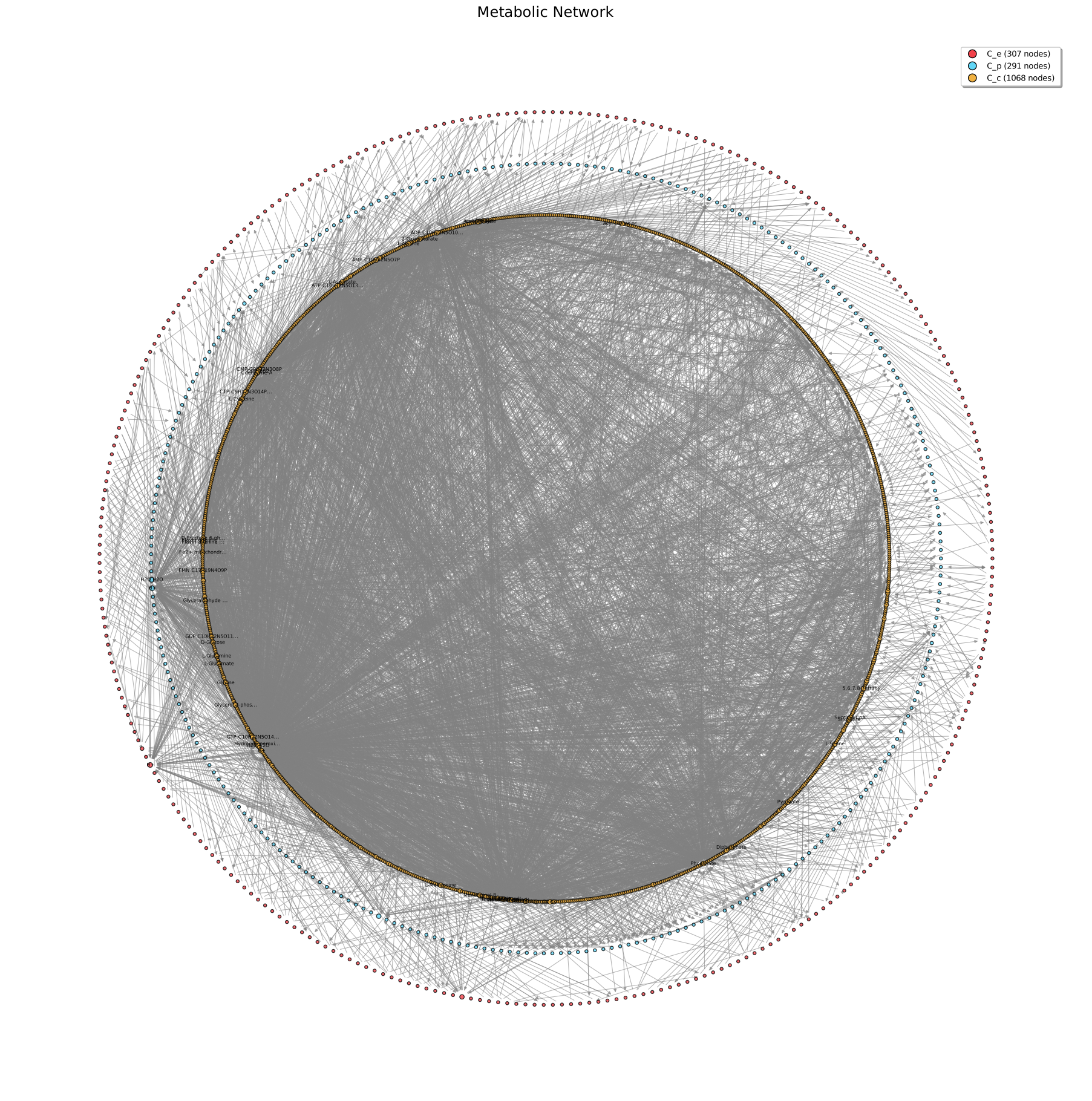
解读要点:
- 节点:代表代谢物,颜色表示其所在区室
- 边:代表代谢反应,箭头方向表示反应方向
- 连接度:节点大小反映其连接度(degree),即连接的边数
- 布局:同心圆布局,内圈为胞质(C_c),外圈为周质空间(C_p)和细胞外环境(C_e)
3. MAG.*_network_interactive.html
交互式代谢网络图,使用Plotly库实现:
- 支持缩放、平移等交互操作
- 鼠标悬停在节点或边上可显示详细信息
- 可通过按钮切换标签显示/隐藏
4. MAG.*_nodes.xls
代谢物节点信息表,包含以下列:
| 列名 | 描述 | 示例 |
|---|---|---|
| id | 代谢物唯一标识符; 可能来自于 BiGG数据库 | M_10fthf_c |
| name | 代谢物名称 | 10-Formyltetrahydrofolate |
| compartment | 所在区室 | C_c |
| degree | 连接度 | 12 |
示例数据:
             id                                               name compartment  degree
0    M_10fthf_c                          10-Formyltetrahydrofolate         C_c      12
1  M_12dgr140_c  1,2-Diacyl-sn-glycerol (ditetradecanoyl, n-C14:0)         C_c       4
2  M_12dgr140_p  1,2-Diacyl-sn-glycerol (ditetradecanoyl, n-C14:0)         C_p       3
3  M_12dgr160_c   1,2-Diacyl-sn-glycerol (dihexadecanoyl, n-C16:0)         C_c       6
4  M_12dgr160_p   1,2-Diacyl-sn-glycerol (dihexadecanoyl, n-C16:0)         C_p       3
5. MAG.*_edges.xls
代谢反应边信息表,包含以下列:
| 列名 | 描述 | 示例 |
|---|---|---|
| source | 反应物代谢物ID | M_10fthf_c |
| target | 产物代谢物ID | M_fprica_c |
| reaction | 反应ID | R_AICART |
| reaction_name | 反应名称 | Phosphoribosylaminoimidazolecarboxamide formyltransferase |
| reversible | 是否可逆反应 | True |
示例数据:
       source      target  reaction                                              reaction_name  reversible
0  M_10fthf_c  M_fprica_c  R_AICART  Phosphoribosylaminoimidazolecarboxamide formyltransferase        True
1  M_10fthf_c  M_thf_c   R_GARFT                Phosphoribosylglycinamide formyltransferase        True
2  M_10fthf_c  M_fgam_c   R_GARFT                Phosphoribosylglycinamide formyltransferase        True
3  M_10fthf_c  M_h_c    Growth                                           Biomass reaction       False
4  M_10fthf_c  M_adp_c    Growth                                           Biomass reaction       False